


Introduction
Banks are very much involved in handling money, payments as well as giving financial services. The nature of banking and a lot of money that banks deal with makes strict regulations essential in order to promote security and confidence in the financial system. Banking regulations refer to rules and laws that have been established by governments and financial regulators in order to govern the operations of banks. These laws assist in securing the customers against fraud, economic instability and dishonest banking tactics. In the absence of regulations, banks may be inclined to make unnecessary risk which may prove detrimental to the customers and the economy. It can be seen that having knowledge of banking regulation mechanism can make customers feel safer to involve banking services.
Introduction to Fintech and the Revolution of the Financial Industry
What Do Banking Regulations Mean?
Banking regulations refer to legal provisions that are set by governments and financial regulators to take control of the operations of the banks and other financial institutions. These laws help to keep the banks safe, stable in financial terms and fair to customers. To ensure that banks abide by these rules, regulatory bodies oversee banks. Such authorities can be central banks, financial supervisory bodies and government financial departments. Banking regulations address numerous issues of financial activities, lending practices, customer protection, financial reporting, and fraud prevention.
The significance of Banking Regulations
Banking regulations are there to ensure that there is stability in the banking system and that the customers are not subjected to financial risks. Banks store customer deposits, make payments and offer credit facilities. When banks are not properly monitored, customers may end up losing money or other financial losses. There are rules that compel the banks to adhere to strict financial standards. These standards are used to maintain the financial strengths of banks and make them financially fit to face economic challenges. Strict laws also serve to promote the faith between the customers and the financial institutions.
Customer Deposits Protection
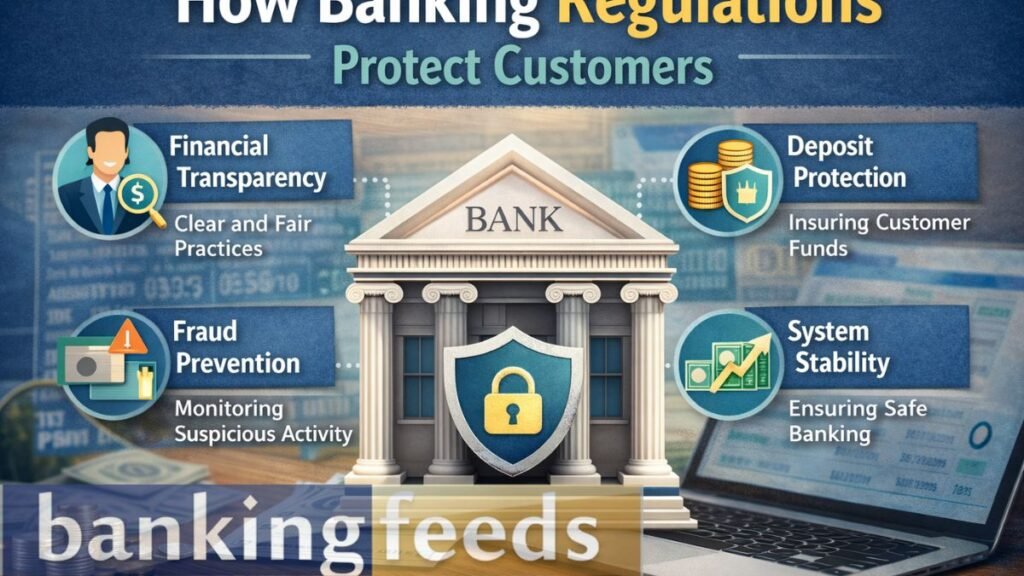
Banking regulation is one of the essential methods of customer protection and, in this case, their deposits are preserved. A large number of nations have deposit protection schemes that guarantee the money of the clientele deposited in a bank. Deposit insurance assures that in the event of bank failure the customers will be reimbursed to some limit. This insurance decreases chances of losing savings in case of insolvency of the banks. Financial regulators promote confidence in the banking system by deposits protection.
Fraud and Financial Crime Prevention
The banking regulations also concentrate much on the prevention of financial crimes like the fraud, money laundering and identity theft. Banks ought to adopt stringent measures and protocols in order to authenticate the identity of their customers and keep track of unusual transactions. Banking institutions employ sophisticated technologies and regulation compliance systems to identify any financial activity that is abnormal. The systems assist in the detection of possible fraud and guard against unwarranted transactions by customers. Banks are also expected to disclose suspicious activities to financial monitoring agencies by the regulatory authorities.
Fair Lending Practices
Banking laws provide a fair way of handling the customers by the banks when offering banking services like loans and credit facilities. Financial institutions are bound to abide by policies that will not display discrimination and unfair lending. The customers must be provided with accurate data on the plan of the loans as well as the interest rates, and repayment. The regulations assist the customers in making sound financial choices and guard them against the misleading financial products or secret costs.
Financial Transparency
The laws mandate banks to give transparent financial information to the customers. Transparency also gives the customers the knowledge of the costs, risks, and conditions involved in banking services. Banks are required to reveal material information which includes account charges, interest rate and the terms of loan repayment. This information can be reviewed by the customers prior to assent to financial products. Financial transparency assists the customers of the banking services to compare the banking services and select the most appropriate variables.
Monitoring Bank Stability
Bankers are regularly checked by regulators to make sure that they have enough financial resources and have reasonable lending habits. To cushion against financial losses, the banks are required to maintain some capital. These capital requirements are used to avoid financial crises and minimise the risk of bank failures. Frequent inspections and financial audits enable the regulators to know the risks that may arise before they lead to serious issues.
Consumer Complaint Systems
Financial institutions are also frequently mandated by the banking regulations to have a system of complaints resolution to the customers. In case of some problems with the customers like unauthorized payment or services, they are allowed to claim to the bank about their complaints. Failure to solve the problem may lead to customers taking the matter to the financial regulator or consumer protection agencies. Such systems provide the customers with a means of getting help in case of difficulties.
The Technology of Regulatory Compliance
Technology has been adopted in modern banking systems in order to meet the requirements of the regulator. Banks have also adopted digital surveillance systems which scan the transactions and identify any suspicious financial transactions. AI and data analytics can assist financial institutions in detecting trends of fraud and keep them up to regulatory standards. The use of technology has improved the efficiency in regulatory compliance and enhancing the customer protection mechanisms.
Dilemmas in Banking Regulation
Despite high protection offered by the banking regulations, financial systems are still challenged by emerging challenges. The new digital banking, cryptocurrencies, and financial technology have brought new regulatory challenges. The regulators need to continuously revise the financial laws to meet the new currency financial technology and security risks. The issue of balancing innovation and regulation is a current problem that financial authorities all over the world struggle with.
Conclusion
Banking regulations are also critical in safeguarding the customers and stability in the financial system. These rules aim at making banks responsible, protecting deposits of customers, deter fraud and offer transparent financial services. Regulators are ensuring that the banking industry remains trusted by holding the financial institutions to high standards and keeping a check on them. Banking laws will be vital in safeguarding the customers and ensuring a healthy financial system in the world as financial technology keeps changing.