
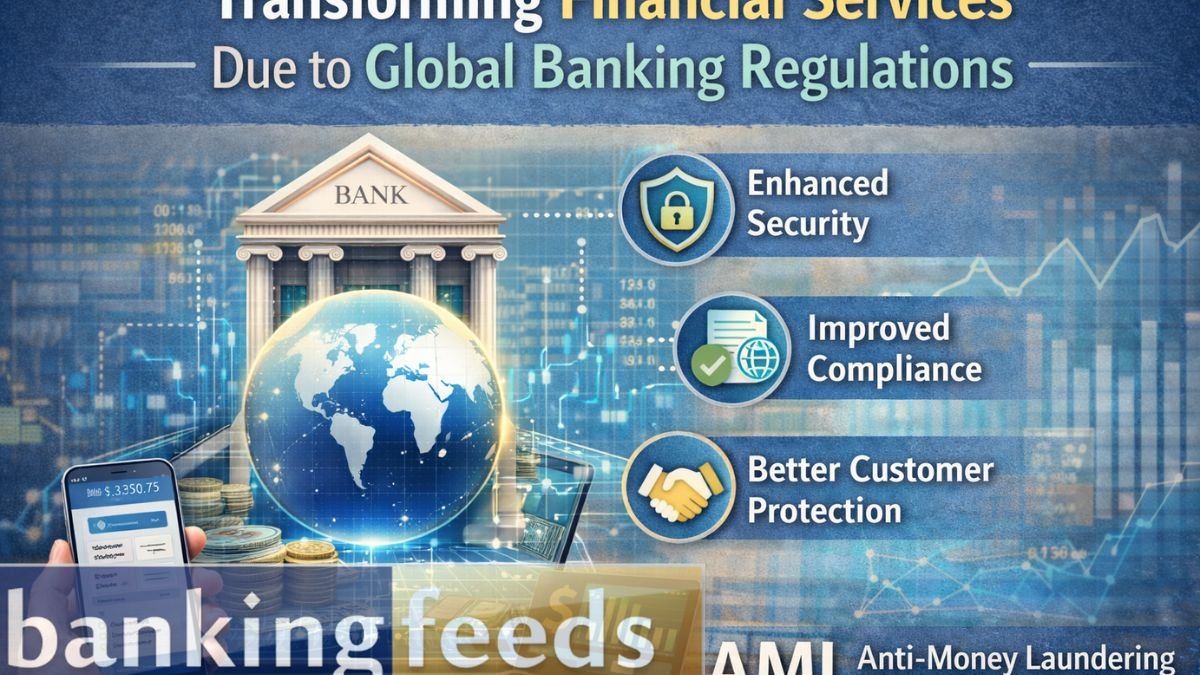
A transforming Financial Services due to Global Banking Regulations
Introduction
The banking sector worldwide is constantly developing due to interconnecting and going digital with the financial systems. Governments and global financial regulators to ensure that the financial market is stable and that consumers can be safe inject regulation to the banking institutions which dictate the operations of these companies. These laws affect the lending activities and digital payments, as well as financial transparency and risk management. Over the last few years, the world banking laws have been complicated through the technological advancement, global financial transactions and the emergence of the financial technology related companies. The regulators are keen to make sure that the financial services are safe and at the same time innovation can flourish. Knowing the impact of global banking regulations on financial services will allow customers and businesses be aware of the changes in the
contemporary banking.
What Is KYC and Why Banks Need It
What are Global Banking Regulations?
Global banking regulations are laws designed by governments, central banks and other international financial institutions to oversee the banking systems so as to preserve financial stability. These regulations stipulate the banking practices concerning capital management, management of customer funds, financial transactions monitoring, and financial crime prevention. The Bank for International Settlement (BIS) and other international financial committees are said to assist in setting the standards of regulations that affect the banking systems of the globe. These rules help in ensuring that financial institutions engage in responsible financial business and minimize risks that may endanger the global economy.
The significance of the global banking regulations
Banking laws safeguard the financial system and the customer. Unless it is monitored, it can result into excessive financial risks by banks which may cause economic crises.
- Severe regulations contribute to a number of crucial objectives:
- Protect customer deposits
- Stop financial fraud and money laundering.
- Stabilize the financial markets.
- Enhance financial reporting.
- Through such standards, the regulators assist in ensuring that financial institutions are responsible.
Empowering Financial Stability
Financial stability is one of the principal objectives of the banking regulations. Banking institutions are required to hold adequate capital reserves to contain financial losses when there is a recession in an economy. Capital requirements make banks sound and able to fulfil the obligation of customers. The banks will be less likely to fail in case of economic crisis as long as banks have healthy financial reserves. Banking standards like Basel standards are international regulatory frameworks that determine the amount of capital reserve the banks should have in order to cope with financial risks. These norms are useful in ensuring that the international financial system is not affected by significant shocks.
Influx on Digital Banking and Fintech
The digital banking and fintech companies are also changing the regulations of the world. With the growing digitalization of financial services, regulators need to make sure that emerging technologies are working in transparent and safe systems.A large number of nations have been enacting legislation to regulate online payment gateways, online lending, and cryptocurrencies markets. Such regulations safeguard clients against frauds and ensure innovation of financial services. Regulations are currently concerned with the pursuance of equitable technological development and economic stability.
Anti-Money launder and financial transparency
The global banking guidelines are very keen on the prevention of financial crime. Anti-Money Laundering (AML) and Know Your Customer (KYC) are practice requirements that banks have to adhere to in order to check the identity of customers, as well as track their financial transactions. These measures assist financial institutions in detecting suspicious transactions as well as ensuring that illegal funds do not find their way into the financial system. The financial transparency requirement also makes sure that the banks show their financial operations to the regulators. This assists the regulators to keep track of the well being of financial institutions and identify the potential risks.
Measures on Consumer Protection
Regulation of banks is also involved in ensuring that customers are not exposed to malpractice in the field of banking. The regulators make banks give straightforward information on financial products including loans, credit cards, and investment services. Financial arrangements should be signed by the customers with the clear rates of interest, charges and terms of repayment. These safeguards are used to enable informed financial decision-making by consumers to prevent the concealed costs or misleading financial products.
International Co-ordination between financial regulators
Due to the fact that financial markets are subject to global transactions, international collaboration in regulation between states is imperative. Financial institutions in the international arena work together to ensure that regulatory standards are held at a steady level. Regulatory co-operation assists in international payment risks, multinational banking business as well as international financial markets. This cooperation is used to keep the global financial system stable. Problems of Global Banking Regulations.
Even though banking regulations offer significant protection, they have some challenges.
Regulatory Complexity
There are a number of regulatory frameworks that financial institutions need to adhere to particularly those that have operations in various countries. This makes it more expensive to conduct business by banks.
Finding a balance between Innovation and Regulation
The development of financial technology is fast. The regulators will need to keep up with the policy changes to have a regulatory framework that will not expose the financial system to new risks through innovation.
Compliance Costs
Banks have to invest in technology, compliance teams and monitoring systems to comply with regulatory demands. Regulations are, however, necessary despite these difficulties to ensure safe financial systems.
Banking Regulations in the Future
Global banking regulations are expected to revolve around the emerging financial technologies in the future. Financial regulators are examining the impact that technologies, including artificial intelligence, blockchain, and digital currencies, will have on financial markets. The central banks also consider the topic of Central Bank Digital Currencies (CBDCs) that can bring new regulatory standards of virtual money. Given that the financial services keep changing, the regulators will change the policies in a way that innovation and security grow concurrently.
Conclusion
International banking standards are important in the development of the contemporary financial services. These laws protect consumers, ensure financial stability and illegal financial practices are avoided. With the increase in digital banking and fintech innovations, the regulatory frameworks need to change to respond to the emerging challenges in finances. Regulators are able to balance innovation and security to develop a more efficient and trust-worthy financial system. The knowledge of such regulatory changes makes customers and businesses aware of the future of international banking.